Grain free pet food for cats and dogs
WHAT ARE “GRAIN-FREE” PET FOODS?
Pet foods that are sold as ‘grain-free’ typically do not contain grains. Grain-free foods typically contain ingredients such as pulses including beans, chickpeas, and lentils, and can also include tubers (e.g., potatoes). More recently, grain free pet foods have become a popular feeding choice for some pet owners.
WHAT ARE GRAINS?
Grains (cereals) are a group of ingredients that contain mainly starch as well as varying amounts of protein, fibre, lipids, vitamins, and minerals and are used in pet foods. Grain examples include rice, corn, wheat, barley, sorghum and oats.
WHAT ARE PULSES?
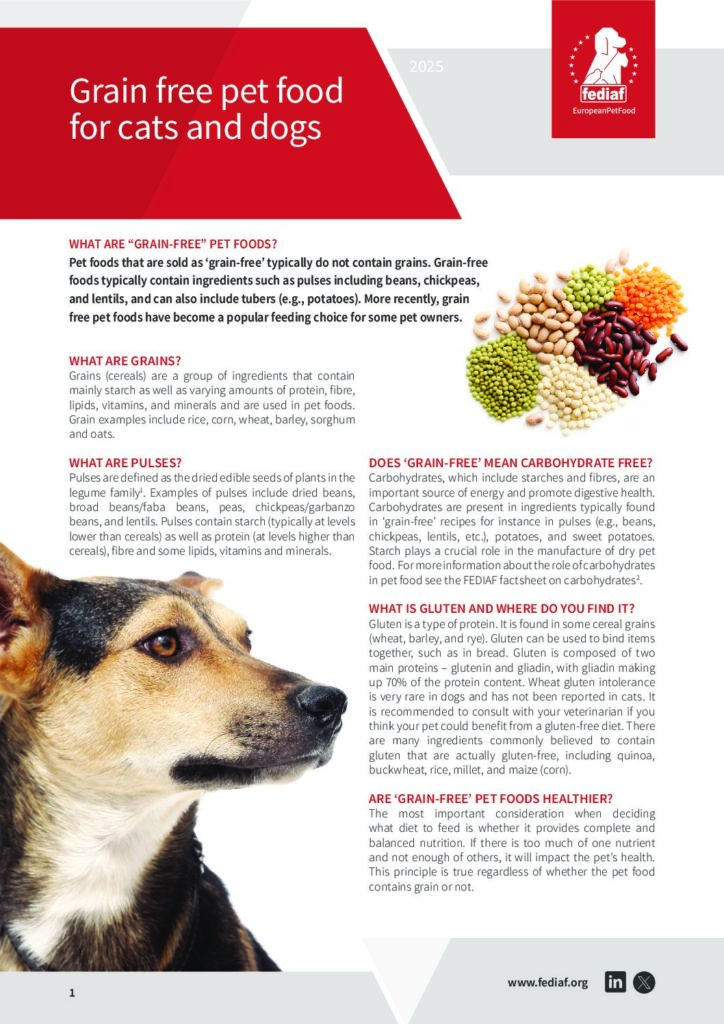
Pulses are defined as the dried edible seeds of plants in the legume family1. Examples of pulses include dried beans, broad beans/faba beans, peas, chickpeas/garbanzo beans, and lentils. Pulses contain starch (typically at levels lower than cereals) as well as protein (at levels higher than cereals), fibre and some lipids, vitamins and minerals.
DOES ‘GRAIN-FREE’ MEAN CARBOHYDRATE FREE?
Carbohydrates, which include starches and fibres, are an important source of energy and promote digestive health. Carbohydrates are present in ingredients typically found in ‘grain-free’ recipes for instance in pulses (e.g., beans, chickpeas, lentils, etc.), potatoes, and sweet potatoes.
Starch plays a crucial role in the manufacture of dry pet food. For more information about the role of carbohydrates in pet food see the FEDIAF factsheet on carbohydrates2.
WHAT IS GLUTEN AND WHERE DO YOU FIND IT?
Gluten is a type of protein. It is found in some cereal grains (wheat, barley, and rye). Gluten can be used to bind items together, such as in bread. Gluten is composed of two main proteins – glutenin and gliadin, with gliadin making up 70% of the protein content. Wheat gluten intolerance is very rare in dogs and has not been reported in cats. It is recommended to consult with your veterinarian if you think your pet could benefit from a gluten-free diet. There are many ingredients commonly believed to contain gluten that are actually gluten-free, including quinoa, buckwheat, rice, millet, and maize (corn).
ARE ‘GRAIN-FREE’ PET FOODS HEALTHIER?
The most important consideration when deciding what diet to feed is whether it provides complete and
balanced nutrition. If there is too much of one nutrient and not enough of others, it will impact the pet’s health. This principle is true regardless of whether the pet food contains grain or not.
The best way to ensure a healthy diet is to feed a complete food appropriate to the pet and their life stage. Your veterinary health care team can help select an adequate food for each case. For those that prefer grain-free pet food, there is a good selection of products on the market.
ARE ‘GRAIN-FREE’ DIETS BETTER FOR PETS WITH ALLERGIES?
While adverse reactions to food do occur in pets, the true prevalence of dietary intolerance or allergy in pets is unknown but thought to be rare. Reports vary, however one review found that cutaneous adverse food reactions (CAFR) – which include allergies as well as intolerances – have a prevalence of between 1-2% of dogs and 0.2% of cats, presented to veterinarians3. It is important to remember that not all allergies are linked to food e.g., fleabite allergy, and it is important to investigate all potential causes with your veterinarian.
Whilst a very small number of pets, like humans, may be intolerant or allergic to a particular grain, this does not mean that other grains are not tolerated, that all pets will be affected, or that any one grain is inherently bad for the health of pets.
Available research has highlighted that the most common proven allergens for cats and dogs are protein sources and include beef, chicken, fish, and dairy products4. Owners concerned about dietary intolerances or allergies should always speak to their veterinarian. It is important to work closely with your veterinarian to determine the cause of your pet’s allergy. An allergic response can occur to any protein, including those contained in cereals and pulses. Specialized diets are available that are designed for the reduction of food intolerances and allergies.
ARE ‘GRAIN-FREE’ DIETS LINKED TO HEART PROBLEMS IN DOGS?
The US Food and Drug Administration (FDA) opened an investigation into the occurrence of non-hereditary dilated cardiomyopathy (DCM) in dogs in 2018, when they noted an association between reported cases of DCM and some diets containing a very high proportion of pulses and/or potatoes5,6. Diets reported included both ‘grain-free’ and grain-containing formulations. In some cases of DCM, a
change in diet is part of the treatment as it can result in clinical improvement. Research to examine a potential cause has been inconclusive to date.
The FDA is also continuing to explore the role of genetics, underlying medical conditions, and/or other factors in DCM. The FDA did not recall any products at any time. In December 2022, FDA issued a statement saying that it does not intend to release further public updates on DCM and diets until there is meaningful new scientific information to share.
If you have any questions relating to DCM it is recommended that you talk to your veterinarian.
References:
- Ingredient Definitions | IPIC – International Pulse Ingredient Consortium (pulseingredients.com). ↩︎
- Carbohydrates in dog and cat food | FEDIAF (europeanpetfood.org) ↩︎
- Olivry T, Mueller RS. Critically appraised topic on adverse food reactions of companion animals (3): prevalence of cutaneous adverse food reactions in dogs and cats. BMC Vet Res. 2017 Feb;13(1):51. doi: 10.1186/s12917-017-0973-z. PMID: 28202060; PMCID: PMC5311844. ↩︎
- Mueller RS, Olivry T, Prélaud P. Critically appraised topic on adverse food reactions of companion animals (2): common food allergen sources in dogs and cats. BMC Vet Res. 2016 Jan 12;12:9. doi: 10.1186/s12917-016-0633-8. PMID: 26753610; PMCID: PMC4710035. ↩︎
- FDA Investigation into Potential Link between Certain Diets and Canine Dilated Cardiomyopathy | FDA ↩︎
- Questions & Answers: FDA’s Work on Potential Causes of Non-Hereditary DCM in Dogs | FDA ↩︎